
Game Guides
PEAK Beginner Guide: Climbing, Stamina and Your First Successful Summit
A practical PEAK beginner guide for route reading, stamina, injuries, food, co-op recovery and reaching the summit without wasting the run.
Edited and published by Christian Kirk, Founder and editor
Research basis Source-backed; hands-on only where explicitly shown
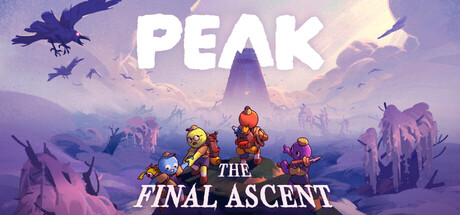 Official PEAK store artwork by Landcrab via Steam
In PEAK, climb in short controlled stages, stop before stamina becomes an emergency and keep one recovery option for the hard part above you. A good group moves at the pace of its weakest climber, shares route information and treats injuries as a reason to adjust the plan rather than sprint toward the next wall.
Core mechanics, group size, rotating mountain structure and item categories come from the official Steam listing. The climbing routine is editorial advice and does not claim a guaranteed route on the daily mountain.
I chose the topic, scope and source list, and I am responsible for publishing corrections. Automation and AI can help with research sorting, first-draft structure and repetitive formatting. Facts, prices and claims must still trace back to the sources shown on the page. This is not labelled as a hands-on product review.
A small reserve gives you room to correct a missed grab or retreat.
The group is only as safe as the player it can still reach.
The upper route is where a rope or spike can preserve the run.
The first-summit routine
| Phase | What to do | What to avoid |
|---|---|---|
| Before climbing | Scan for two possible lines and identify a safe ledge | Starting on the first surface you can grab |
| During the climb | Move in short stages and watch the stamina reserve | Spending the last stamina on an uncertain grab |
| At a ledge | Recover, check injuries and look above | Jumping again because the route feels fast |
| When separated | Stop, use landmarks and restore voice contact | Climbing farther until nobody can assist |
| Before a hard section | Save rope, spikes or recovery items for the commitment | Using every tool on the easy lower wall |
Stamina is a route budget
Treat the stamina bar as permission to attempt the next move, not a timer that must reach zero. Start a difficult traverse with enough reserve to correct one mistake or return to the previous hold.
Injuries reduce the usable stamina pool. Once that happens, shorten each stage and let a healthier teammate test the next line. Food and recovery items are most valuable when they prevent a failed run, not when consumed automatically.
- Pause on reliable ground before opening inventory or discussing the route.
- Call out a bad surface, dead end or difficult transfer before the next player commits.
- Keep the group close enough to help, but leave space so one fall does not disrupt everyone.
- If a route consumed nearly all your stamina, find a safer alternative for the return or recovery attempt.
What changes in co-op
PEAK supports friends-only groups of up to four scouts and uses proximity voice. That makes distance part of the challenge: a fast climber who disappears above the group also removes information and assistance.
Assign simple jobs instead of formal classes. One player reads the line, one watches the next climber, and the player carrying the best rescue tool stays where it can still be used. Rotate those jobs as injuries and inventory change.
FAQ
Can PEAK be played solo?
Yes. The official store page lists solo play, but solo runs demand more conservative stamina and item decisions because nobody can recover a mistake.
How many players does PEAK support?
The official Steam description lists friends-only multiplayer for up to four scouts.
Why does climbing suddenly become harder?
Check injuries and the remaining stamina pool. Injuries reduce your climbing capacity, so the same route may require shorter stages or recovery first.
Sources and methodology
I use official game documentation and patch notes first, then clearly identified community tools when they add something useful. This is source-backed guidance, not a claim that I personally tested every weapon, map or patch.